Greater private-sector participation in rail and ports is creating new commercial relationships and new questions about how risk, capital and certainty are managed. The changes are creating opportunities for new operators and investors, but they are also changing the way risk is distributed across the logistics ecosystem.
 - 700pxl wide_1.jpg "train 11")
For businesses entering the market, gaining access to infrastructure is only one part of the equation. The ability to meet contractual obligations, secure rolling stock, manage working capital and provide the financial security required by counterparties will increasingly influence whether those opportunities are commercially viable.
This broader risk equation deserves greater attention as South Africa’s freight reforms progress.
The conversation needs to move beyond access. When you introduce more participants into an infrastructure system, you also introduce more contractual relationships, more obligations and different risk exposures. The question is whether the ecosystem around those participants is sufficiently developed to give everyone the certainty they need to commit capital.
The shift is already evident in freight rail. In May, Transnet Rail Infrastructure Manager (TRIM) announced that 11 private train operating companies had concluded Rail Access Agreements, marking an important step in opening the national rail network to additional operators. Transnet has said the new operators could introduce an additional 24 million tonnes of freight capacity, with further potential as the market develops. In September, TRIM published the final Version 4 Network Statement and associated Rail Access Agreement, setting out the framework governing access to the network.
The significance of the reform lies not only in who can access the network, but in what is required to participate in it. An operator may have access to the network, but that is only one part of the equation. There are commitments that have to be met before and during operations, and those commitments have financial consequences. That becomes particularly important when you are dealing with new entrants or smaller operators that may not have the same balance-sheet capacity as established businesses.
That issue becomes more pronounced beyond the major freight corridors. TRIM has also been exploring private-sector participation across approximately 9,000 km of secondary and branch lines, including routes that are lower-volume, underutilised or non-functioning. The initiative is intended to establish where private investment, operation, co-funding or concession models may be viable.
These opportunities could bring a different type of participant into the market, says Du Preez, with potentially different financing and risk profiles.
Smaller operators can have a very different risk profile from a large established logistics company. They may have the operational capability and a viable business model, but less established credit records and less capacity to commit large amounts of capital to be tied up as security. In such cases, the structure of a transaction and the associated risk management become particularly important.
This is where guarantees can form part of the wider financial architecture supporting participation. Rather than simply representing another cost of doing business, an appropriately structured guarantee can provide a counterparty with financial security while potentially allowing an operator to preserve capital for the underlying business.
The same principle applies to rolling stock. In June, Transnet issued a request for proposals for LeaseCo as it expands access to locomotives and wagons for operators. For new entrants, leasing can change the initial capital requirement associated with acquiring rolling stock, but it does not eliminate the obligations attached to the assets.
Leasing changes the capital equation, but it doesn't eliminate risk. There are still obligations between the parties, and both sides need confidence that those obligations will be met. Guarantees can form part of that structure.
The same thinking extends to South Africa’s ports, where private participation is also introducing longer-term commercial commitments. Transnet and International Container Terminal Services Inc. (ICTSI) signed a 25-year partnership for Durban Container Terminal Pier 2, with ICTSI responsible for operating the terminal through the partnership structure. A commitment extending over 25 years creates a fundamentally different risk environment from a shorter-term commercial agreement.
With a long-term concession, you cannot assess the risk only against the conditions that exist on the day the agreement is signed. Market conditions, costs, ownership structures and operating requirements can all change over time. The structure of the transaction needs to recognise that the underlying obligations have to remain manageable through those changes.
The interdependence of the system is particularly evident in areas such as fuel supply. For importers and operators, fuel movement depends on multiple parts of the logistics chain functioning together, from ports and pipelines to road networks.
If you are importing fuel, the ports need to be able to handle the volume of cargo vessels efficiently. The storage and pipeline systems also need to work as part of the same ecosystem. A constraint in one part can create pressure and delays somewhere else, which is why certainty between the different parties is important.
Ultimately, the evolution of South Africa’s freight system should be viewed not simply through the lens of infrastructure access, but through the relationships and risk mechanisms that enable different participants to operate alongside one another.
It is an uncertain environment, and there is not just one solution. Insurance is part of it, banks have a role to play, and the different participants need to understand the risks they are taking on. The question is how the ecosystem comes together to create enough certainty for business to commit capital and participate.
The next phase of freight reform may therefore be measured not only by how many new participants enter the market, but by how effectively the commercial and financial structures around them support sustainable participation.
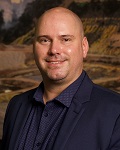
Thomas du Preez, Head of Trade Guarantees at Credeq Africa