
Every fleet manager dreads the call that tells them of an accident. They know that in seconds, a routine journey can become a crisis, resulting in injured drivers, damaged vehicles, halted operations and, in the most tragic scenarios, a driver who never arrives safely home.
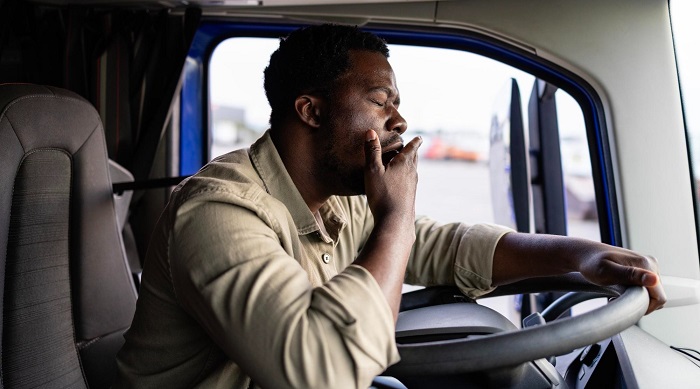
Every fleet manager dreads the call that tells them of an accident. They know that in seconds, a routine journey can become a crisis, resulting in injured drivers, damaged vehicles, halted operations and, in the most tragic scenarios, a driver who never arrives safely home.
The unfortunate truth is that human error is still to blame for a high proportion of fatal crashes and fatigue is one of the most serious and underestimated contributors. This is particularly acute in South Africa, where truck drivers can legally work up to 90 hours a week. The country reports one of the world’s highest road-traffic fatality rates at approximately 24–25 deaths per 100,000 people - four to five times higher than the European Union average.
Injury and loss of life are, of course, the worst possible outcomes of an accident - but other negative consequences must not be ignored. Serious incidents also carry significant commercial implications. These include the cost of medical expenses, vehicle repairs and higher insurance premiums, along with operational disruption and a reduced workforce while a driver is off the road.
The Road Traffic Management Council estimates that South Africa’s broader road‑crash bill amounts to approximately R200 billion a year – close to 3% of GDP.
The complexity of fatigue detection
Unlike speeding or harsh braking, fatigue doesn't offer any obvious warning signal. Even a brief lapse can have catastrophic consequences. For example, a five-second microsleep at 100km/h means a vehicle can travel more than 130 metres completely uncontrolled - roughly the length of a rugby field.
While identifying fatigue has been notoriously difficult, advancements in video technology are making it easier to recognise the signs faster and more accurately. A combination of technology, people and data is helping fleets to detect, respond and reduce fatigue-related events.
Real-time intervention
Early detection is the first line of defence. Advancements in AI-powered video telematics are already helping fleets to intervene earlier and more effectively. This latest technology is able to identify multiple signs of fatigue such as eye and head movements. Importantly, it has also reached a new level of accuracy.
For example, it can distinguish between a driver momentarily looking down to change gear and one whose head is dipping from drowsiness. The technology automatically notifies drivers of risk in real-time via a seat vibration or an audio-visual alert, so they can take a rest break. The improved accuracy and lower level of false positives means that drivers take these alerts seriously.
Human expertise
In-cab alerts like these have helped decrease behavioural risk by as much as 80%, but fleets also need to be ready for when things escalate. If a driver falls into a microsleep, rapid human intervention is crucial.
This is where early-warning control tower services play a vital role. Specialist agents can be alerted by the AI-powered technology that a driver appears to be in a dangerous state of fatigue. They then review a mini-clip of footage and alert managers to any high-risk events within three minutes. The driver can then be contacted and asked to remove themselves from the road within minutes.
Our own team of highly trained people reviews up to two million video events a month. In 2025 alone, this helped to prevent tens of thousands of incidents globally.
Predictive risk - addressing the root cause
Prevention does not end here. The most sophisticated fleets are using technology to understand why fatigue is occurring. By analysing data drawn from in-cab technology and verified by human review, fleets can identify factors that may be contributing to fatigue such as particular shift patterns, routes, or times of day. In these cases, action can be taken to modify working patterns.
Our own data highlights, for example, that fatigue on South African roads is worst in the early morning. Between 4am and 6am, drivers on certain highways in Mpumalanga face the highest risk, followed by stretches of road in Gauteng province and Limpopo. Another common challenge for fleets is how to tackle long stretches of road that are particularly monotonous or have limited places to stop.
Whatever the pattern may be, having access to big-picture insights like these can inform operational decisions. Remedial action can include reviewing scheduling and break structures, strengthening daily communications and refining driver coaching and support.
Managing fatigue effectively goes way beyond installing hardware in a vehicle. It requires a coordinated approach: technology to detect risk, human expertise to act decisively and data analytics to anticipate and prevent escalation. When these elements work together, fleets can take a proactive approach - protecting drivers and helping ensure that all road users arrive home safely.

Inge-Marie Hilligan, group executive for product and culture at Optix