

Growthpoint Properties has reached a significant sustainability milestone with 12 net-zero carbon certification projects across its South African logistics, industrial and office portfolios.
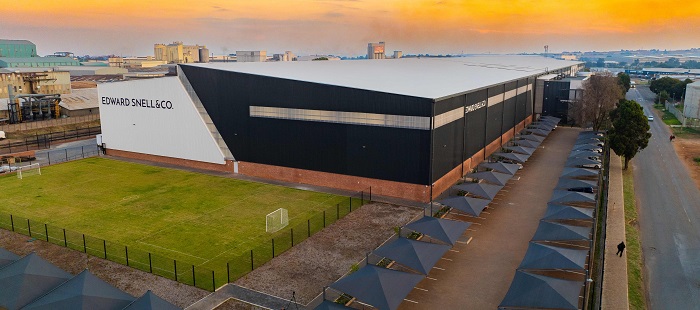
This achievement forms part of Growthpoint’s broader commitment to reaching net-zero certifications across 20 buildings by 2028, while supporting its ambition of carbon neutrality across its portfolio by 2050. The projects are aligned with the Green Building Council South Africa’s (GBCSA) Net Zero Carbon certification framework, which recognises buildings where operational carbon emissions are measured, reduced as far as possible, and balanced through renewable energy and verified offsets.
The portfolio includes a mix of premium office developments and high-performance logistics and industrial facilities, many of which combine rooftop solar photovoltaic (PV) installations, energy-efficient building systems and detailed energy monitoring technologies to reduce reliance on grid electricity and improve operational performance.
“Reducing operational carbon emissions across our portfolio is an important part of how we future-proof our business, support our customers and contribute to the transition to a lower-carbon built environment,” says Engelbert Binedell, Chief Operating Officer at Growthpoint Properties.
Binedell adds, “These projects demonstrate that meaningful decarbonisation in the property sector requires a combination of energy efficiency, renewable energy generation, data-driven operational management and long-term planning. Importantly, they also form part of a broader strategy to reduce reliance on carbon offsets over time as cleaner energy becomes more accessible and scalable.”
The logistics and industrial portfolio has proven a particularly strong contributor to Growthpoint’s net-zero carbon journey, with certifications achieved across assets including Monteer in Isando, Ebony in Meadowdale, Growthpoint Industrial Estate in Germiston, GIE Portions 1 & 2 of Erf 308 in Meadowdale, Meadowbrook Estate in Germiston, Trade Park in Mount Edgecombe and 20 Rustic Close in Durban North.
Several of these projects achieved substantial improvements in energy performance compared to typical industrial buildings (as defined by the GBCSA), supported by extensive rooftop solar PV installations and operational efficiency interventions. Monteer recorded a 79% improvement in energy performance, while Ebony achieved a 73% improvement and Growthpoint Industrial Estate recorded a 69% improvement.
Meadowbrook Estate, is particularly notable for achieving its net-zero carbon certification with 0% offsets, demonstrating how highly efficient buildings paired with on-site renewable energy can significantly reduce operational carbon reliance.
“The logistics and industrial sector presents significant opportunities to improve energy performance at scale, particularly through solar PV deployment, operational optimisation and better energy visibility,” says Jason Reeves, Head of Asset Management for Growthpoint’s Logistics and Industrial Portfolio. “As customer expectations evolve and energy resilience becomes increasingly important, these certifications demonstrate that industrial properties can achieve meaningful operational carbon reductions while continuing to support efficient logistics and distribution operations.”
Growthpoint’s broader decarbonisation strategy includes increased focus on energy efficiency, rooftop solar expansion, renewable energy wheeling and long-term renewable power purchase agreements designed to reduce dependence on carbon-intensive electricity supply over time.
Growthpoint currently holds 141 green building certifications across the portfolio, emphasising the scale of its ongoing investment in sustainable property performance and operational resilience.
“As South Africa’s property sector continues to navigate energy insecurity, climate risk and evolving tenant expectations, Growthpoint’s expanding portfolio of net-zero carbon projects reinforces its position at the forefront of sustainable commercial property development and operations in the country,” concludes Binedell.