Logistics has a visibility problem and it’s costing the industry women. South Africa's freight and logistics sector is not short of ambitious women. Rather, it is short of women who know the sector exists as a career.

While women account for roughly 28% of South Africa’s logistics workforce, they hold fewer than a quarter of its senior leadership roles. The problem starts long before the interview.
Women are not necessarily interested in logistics as a career because they don’t know what it is. There is very little exposure to what logistics involves or where women can contribute.
For most people, logistics still means trucks, couriers and the physical movement of cargo. The customs and compliance work, the financial structuring behind a project cargo shipment, the operational problem-solving that keeps a vessel loading on schedule - none of it is visible from the outside. An industry that shows the public only its most traditionally male face, should therefore not be surprised by who applies.
Exposure changes career paths
My own route is evidence of the argument. I entered by chance, as a personal assistant at a small logistics company. My role expanded into accounts, which gave me a view of the financial side of the business and, eventually, a career in freight finance. From an administrative desk, I went on to co-own a freight company.
What made that possible was breadth - seeing past the boundaries of the job I was hired to do. I want the same for young women entering now, rather than placement into narrowly defined roles.
If women are exposed to the industry, even through learnerships, they begin to see what the rest of the business involves. Someone may enter through finance and then realise that she can work in operations or move into a completely different role.
My own work runs well beyond the finance desk. At JLOG International I put on safety boots, a hard hat and a reflective vest, climb into a bakkie and collect cargo from the airport for delivery to a vessel - another item on the day's to-do list.
We should not stand back, doubt our knowledge or be intimidated by work simply because it looks complicated.
The same playing field
Freight is demanding. It requires people who can manage pressure, solve problems quickly, pay close attention to detail and communicate effectively. The case for bringing more women in is not a concession. It is that the sector cannot afford to recruit from half its available talent.
Women make up more than half of JLOG's employees, an outcome the company did not set out to engineer. We did not go out saying we wanted to employ a man or a woman but rather looked for the best person. The point is to give people the same playing field and the opportunity to show what they can do. Women do not want handouts. They want to earn their positions.
I am a strong advocate for learnerships as the sector's first point of contact with new talent and also about how they fail. Treated as a number to be recorded, the opportunity is lost. When you give someone the chance to build a career, you are helping that person create a life and support a family. It should be about the person, not simply the number of learners a company has taken on.
Getting women through the door is the easy part. Progress has been real in smaller freight businesses, but the corporate environment has not matched the pace. "We have seen change over the last few years, but it is still too slow."
My advice to women considering the sector: Do not be intimidated by how complicated logistics may appear. Also, do not lessen your voice or hide your ability behind fear. Own your space and take the risk. It is a journey well worth the ride.
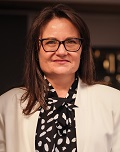
Odette van Zyl, Financial Director and co-owner of JLOG International