
Rapid advances in technology and increased demand for critical minerals are reshaping global trade, which, alongside geopolitical tensions, is placing increasing pressure on Southern Africa’s bulk supply chains. Yet, despite these rapid changes across mining, agriculture, and industrial sectors, road logistics remains one of the most critical components for maintaining export continuity across the region.
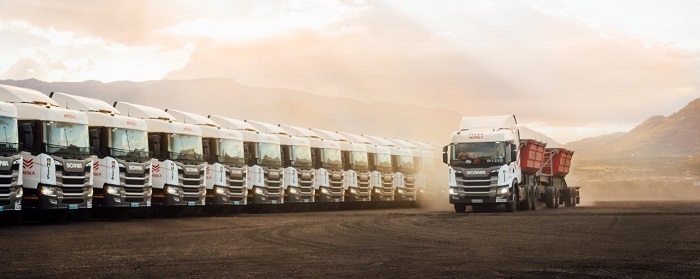
The shifting demand for critical minerals is directly impacting the local bulk supply chain. It’s not just the type of materials being transported, but the increase in transport volumes that are impacting routing strategies and the operational demands on Southern Africa’s logistics networks.
Road transport remains key to this bulk supply chain, providing a level of flexibility and accessibility that is difficult to replicate across other freight modes: Southern Africa’s extensive road network connects mines, agricultural operations, inland depots, ports, and cross-border corridors, allowing for the ease of commodity movement from production sites straight to export terminals.
Road transport’s adaptability is also vital as conditions shift rapidly. Because it’s not a fixed-route transport system, road logistics allow operators to adjust routing and operational planning in real-time, responding to any unforeseen disruptions or last-minute changes.
This flexibility is particularly important across Southern Africa’s long-haul and cross-border corridors, where weather events, infrastructure pressure, border delays, and operational disruptions can impact delivery. This makes operational visibility – the ability to monitor fleet movements in real time – an absolute necessity.
Coordination Across Corridors
Road logistics is the ‘connective layer’ between product and export: With market conditions always in flux, supply chain reliability really depends on how effectively operators can coordinate movement across these corridors.
This coordination has become more evident as supply chains become more integrated, and time pressures increase: Fragmented logistics structures - where transport operates independently from mine scheduling, warehousing, loading operations, or port activity - create delays which, if left unattended, can compound across the export chain. Bulk logistics can’t operate as isolated transport movements anymore; there has to be alignment.
Integrated Support
As regional supply chain complexity increases, logistics partners need to provide integrated operational support covering warehousing, container logistics, loading coordination, and cross-border management (where necessary).
Operators need to provide clients with safety management and compliance, as well as traceability throughout the logistics process. As commodity exporters face tighter delivery windows and more operational scrutiny, reliability has become a strategic requirement, not simply a competitive advantage.
In complex Southern African corridors, maintaining export continuity requires structured coordination across production, transport and port systems, supported by real-time visibility and operational control. This is where experienced logistics partners play a critical role in ensuring reliability across the full export chain.
What are the biggest challenges affecting bulk road logistics in Southern Africa?
Bulk road logistics operators face several challenges, including infrastructure pressure, weather disruptions, border delays, fluctuating commodity demand, and evolving operational requirements. In integrated supply chains, even small disruptions can affect loading schedules, delivery timelines, and export continuity, which is why real-time operational visibility and coordinated logistics planning are becoming increasingly important.

By Duhan du Plessis, Group Marketing Manager at Reinhardt Transport Group (RTG).