The order is signed. The goods are manufactured. The customer is waiting. Then comes the question that can change the entire calculation… What will the tariff be?
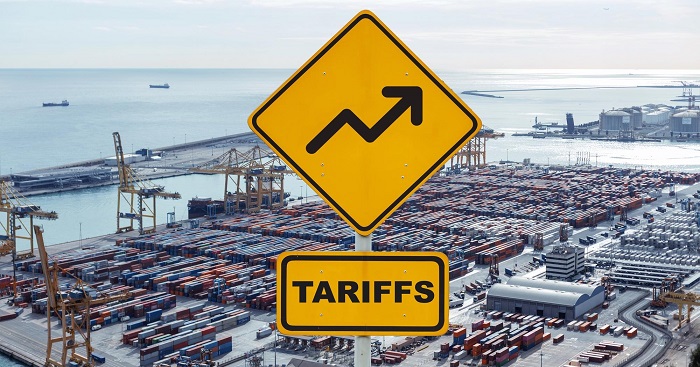
For a business trading across borders, a tariff can feel like an unavoidable part of doing business - another number to add to the landed cost, another expense to absorb, another reason an international deal becomes harder to win.
But what if the tariff isn't necessarily the end of the story? What if, somewhere in the complex web of international trade agreements, preferential arrangements and rules of origin, there is an opportunity to reduce that cost? That is where the tariff conversation gets interesting.
“Tariffs are often viewed simply as another cost of doing business,” says Francois Coetzee, Managing Director of RSA Global. “But in global trade, every cost deserves to be questioned. Trade agreements can create opportunities that businesses may be overlooking, and understanding where preferential treatment applies can fundamentally change the competitiveness of a product in an international market.”
For South African businesses looking beyond their borders, those opportunities are already embedded in the international trading landscape.
AGOA: African Growth and Opportunity Act
One of the clearest examples of tariff becoming opportunity is the African Growth and Opportunity Act (AGOA) - a U.S. trade preference programme created to strengthen trade and investment between the United States and eligible Sub-Saharan African countries. For qualifying products, AGOA provides duty-free access to the U.S. market, covering more than 1,800 products in addition to other products already eligible for duty-free treatment. In September, the U.S. has agreed to extend this agreement to 2028.
For South African businesses, that can be significant. South Africa is an AGOA-eligible country, giving qualifying exporters an opportunity to access one of the world's largest consumer markets with preferential tariff treatment. Lower or zero duties can reduce the landed cost of a product, protect margins and make South African goods more competitive against suppliers from countries that may face higher tariffs.
And that is why businesses should be looking at AGOA before they ship, not after.
A company may already have a viable product, a U.S. customer and a competitive freight rate, but if it isn't assessing whether its goods qualify for preferential treatment, it could be overlooking a significant cost-saving opportunity.
AGOA is not a blanket exemption, however. Eligibility depends on the product, its HS classification, country of origin and applicable rules of origin. Understanding those requirements is therefore key to turning the agreement from a policy on paper into a genuine commercial advantage.
The opportunity isn't simply that AGOA exists. The opportunity is knowing how to use it. And that is precisely why businesses need to understand the opportunity before the cargo moves.
Knowing that an agreement exists is one thing. Knowing whether your shipment qualifies is another.
The tariff is the cost. The agreement could be the opportunity. AGOA is only one example.
Closer to home, South Africa's participation in SACU and SADC creates preferential trading opportunities across participating African markets, subject to the relevant requirements.
South Africa also has preferential trading arrangements with markets including the European Union and United Kingdom, creating further opportunities for qualifying goods.
The agreements may differ. The rules may differ. The products that qualify may differ.
But the principle remains the same - before accepting a tariff as a cost of doing business, ask whether the trading relationship offers another route.
Because the difference between paying the standard tariff and qualifying for preferential treatment isn't simply a customs technicality. It can become a competitive advantage.
The real cost is what happens after the shipment leaves
For years, international logistics conversations have centred around freight rates. Which carrier? Which route? Which port? How quickly can it get there?
All of those questions matter. But there is another question that can be considerably more expensive to ignore: What will it actually cost when it arrives?
Freight. Insurance. Customs. Duties. Tariffs. Documentation. Compliance. The landed cost is the number that ultimately matters to the business, and understanding trade agreements can be an important part of that calculation.
The question businesses should be asking isn't only, ‘What will it cost to move my goods?’ but, ‘What will it cost to get them into the hands of my customer?’” says Craig du Toit, Managing Director of RSA Global.
“Tariffs, duties and compliance can significantly influence that final number. But so can the trade agreements and preferential arrangements available between markets. When businesses understand those opportunities before the shipment moves, logistics becomes more than a cost centre, it becomes a tool for protecting margins and creating competitive advantage.”
From cost centre to competitive strategy
That shift in thinking is becoming increasingly important as businesses navigate a global trading environment where tariffs, trade policy and supply chains continue to evolve.
For an exporter, knowing that a trade agreement exists isn't enough. The real value lies in understanding whether your product, your origin, your destination and your documentation allow you to benefit from it.
Because two businesses can sell similar products into the same market, use similar shipping routes and face the same global pressures, yet arrive at very different landed costs.
The difference may come down to one thing - Who understood the rules first?
As Francois Coetzee, Managing Director at RSA Global, puts it: “In global trade, the strongest decisions are made before the cargo moves.”
International logistics is therefore about more than moving cargo from A to B. It is about understanding what happens between A and B, and navigating the commercial and regulatory realities that can influence the final cost of getting their goods to market.
Because a tariff can be a cost. But sometimes, hidden behind that tariff is an opportunity.