
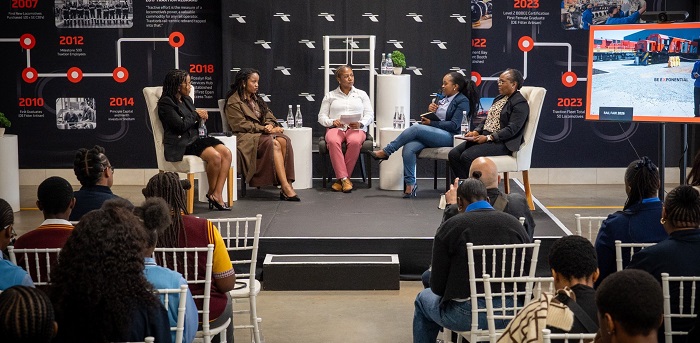
Traxtion hosted its third annual The Future of Rail is Woman event at its Rail Services Hub in Rosslyn, bringing together high school learners, women in rail, professionals and industry partners to highlight the opportunities available to young women across South Africa’s rail sector.
The initiative gives learners practical exposure to the industry while connecting them with women working across engineering, manufacturing, operations, logistics, technology and other areas of the rail value chain.
Learners from Amandasig Secondary School, Rantailane Secondary School, Boitumelong Secondary School, Alafang Secondary School and Royal Academy of Extra Lessons participated in the programme.
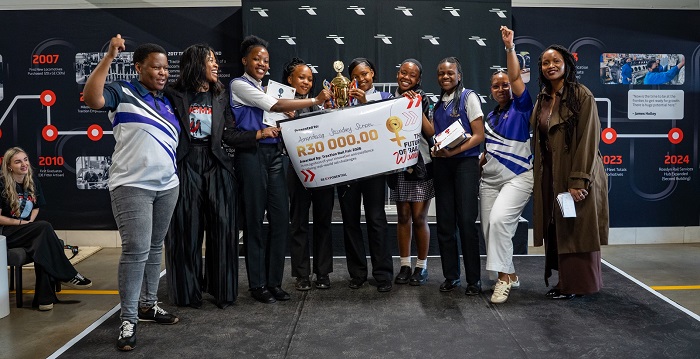
A highlight was the Rail Fair, where learners applied their STEM knowledge to develop and present solutions to real-world rail challenges. Amandasig Secondary School was crowned the winner of this year’s Rail Fair, recognising the learners’ creativity, problem-solving skills and application of STEM knowledge to a real-world rail challenge.
In the weeks leading up to the event, learners worked alongside mentors from Traxtion, SAFLog, Lucchini South Africa and Pamodzi Unique Engineering, gaining industry insight while developing their ideas and preparing for the competition.
“The Future of Rail is Woman is about making the rail industry more visible and accessible to young women as they begin making decisions about their future careers,” said Nnoni Mohlaphuli, Brand, Communications and Marketing Manager at Traxtion.
“It allows learners to engage directly with women already working in the industry, ask questions and gain a better understanding of the many career opportunities available across engineering, logistics, operations, maintenance and technology.”
Speaking to learners, CEO of Voestalpine Railway Systems, Pulane Tshabalala-Kingston, emphasised that the rail industry depends on people with a broad range of skills and encouraged young women not to allow perceptions about gender or difficult subjects to limit their ambitions.
“Without a driver, without an engineer, a technician, an IT specialist, general workers and leaders, they are just heaps of metal,” she said, highlighting the critical role people play in powering the industry.
Tshabalala-Kingston encouraged learners to pursue subjects such as Pure Mathematics and science, while recognising the importance of careers spanning procurement, human resources, health and safety, sales and marketing, finance, information technology and law.
“You don’t have to have everything figured out today. The most important thing is to believe in yourself and take the first step,” she said.
The message was reinforced by industry panellists, who highlighted the importance of creating meaningful pathways for women entering the sector.
Sethunya Matsie, Senior Manager: Permit Assessments at the Railway Safety Regulator, called for greater confidence and professional development opportunities for women in rail, while Pelma Maja, Senior Manager: Monitoring and Reporting Portfolio at Transnet, highlighted the breadth of opportunities beyond engineering.
Nwabisa Gqamane-Ntiyane, CEO: Rail Operations at the Passenger Rail Agency of South Africa (PRASA), encouraged young women to pursue mathematics and science and highlighted the growing participation of women in the sector. Dr Paulina Mamogobo, Chief Economist at the Automotive Business Council (naamsa), emphasised the importance of mentorship and intentional career development.
For Traxtion, the event reinforces the importance of exposing young women to the industry early and helping them understand the opportunities available to them. “The earlier we can expose young women to the rail industry and connect them with the people already shaping it, the better equipped they will be to make informed decisions about their future. By investing in young women today, we are helping to build the future of rail tomorrow,” said Mohlaphuli.