For operations that use heavy industrial equipment, downtime is one of the most significant operational challenges. Unlike smaller assets that can be easily replaced or moved, heavy equipment is often highly specialised and costly to transport.
In many cases, moving a machine requires abnormal load permits and extensive logistical planning, making every hour of downtime a direct threat to productivity and profitability.
Lenny Naidoo, National Product Specialist for Heavy Lift, a division of CFAO Equipment, says for fleet operators working in demanding environments, purchasing equipment is no longer simply about acquiring a machine. “Increasingly, the true value of an investment is determined by what happens after delivery such as the quality of service support, availability of parts, maintenance expertise and the ability to keep equipment operating safely and efficiently throughout its lifecycle”.
At the same time, safety compliance requirements continue to evolve across industries. Equipment owners are increasingly required to implement new technologies and safety enhancements to meet regulatory standards.
Recent examples include machine safety lighting systems that create a visible operating zone around equipment, helping workers maintain safe distances while equipment is in operation. Failure to comply with safety requirements can have serious consequences, including site shutdowns and operational delays.
Against this backdrop, aftermarket support has become a critical component of fleet management strategies. Equipment owners depend on reliable service partners to maximise uptime, ensure compliance and maintain consistent service levels for their own customers.
Customer expectations have also changed significantly in recent years with advances in fleet management technology and telematics systems providing operators with real-time visibility into equipment performance and maintenance requirements. This access to data has increased the demand for responsive, informed support from equipment suppliers.
Naidoo says successful aftermarket partnerships are built on a deep understanding of customer operations, market conditions and production requirements. “Effective support needs to extend beyond routine servicing to include 24/7 responsiveness, technical expertise, proactive maintenance planning and access to quality replacement parts.
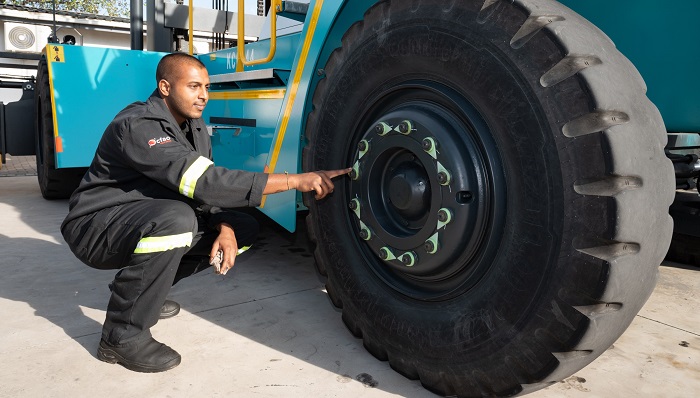
A proactive approach to maintenance plays a particularly important role in preventing costly breakdowns. In addition to scheduled servicing, equipment inspections can identify potential failures before they develop into major issues. This layered approach provides an additional safeguard against unexpected downtime and helps extend equipment life.
The use of genuine, high-quality aftermarket parts is equally important as quality components contribute directly to equipment reliability, operational safety and regulatory compliance. “In industries where a single safety-related incident can bring an entire site to a standstill, the value of reliable parts and support cannot be overstated,” adds Naidoo.
Data-driven maintenance planning is also transforming the way fleets are managed. By analysing operational data and equipment utilisation patterns, maintenance schedules can be aligned with customer production requirements, allowing service activities to be completed with minimal disruption to operations.
Naidoo says Heavy Lift differentiates itself in the market through rapid response times, strong OEM partnerships, highly trained technicians and a commitment to customer uptime. “Ongoing technical training, including annual programmes delivered by OEM specialists, ensures service teams remain equipped to support increasingly sophisticated equipment.”
As industries continue to prioritise productivity, safety and operational efficiency, aftermarket support has become as a strategic advantage. “Ultimately, it is not only the quality of the machine that determines performance, but the strength of the support behind it,” concludes Naidoo.